China
China Pусский
 Español
 EN
ENHow to Match AgCdO Contact Material to Your Switching Application
The real‑world trade‑off hiding in your contact tip
When you open a medium‑capacity AC contactor after a week of heavy cycling, do you find the contacts slightly welded together? Or perhaps the temperature rise around the switching chamber feels higher than expected, even though the device is within its nominal rating.
These two symptoms point to the same root cause: a mismatch between the contact material’s cadmium content and the actual stresses of your application. Silver cadmium oxide (AgCdO) remains one of the most widely used contact materials for medium‑ and high‑power switching devices, but selecting the wrong cadmium percentage forces you to accept either premature welding or excessive contact heating.
This guide explains exactly how the cadmium level changes the physical behavior of the contact, translates material parameters into real operating trade‑offs, and gives you a decision framework to specify the right AgCdO grade for relays, contactors, and switches.
Why cadmium oxide content is not just a number
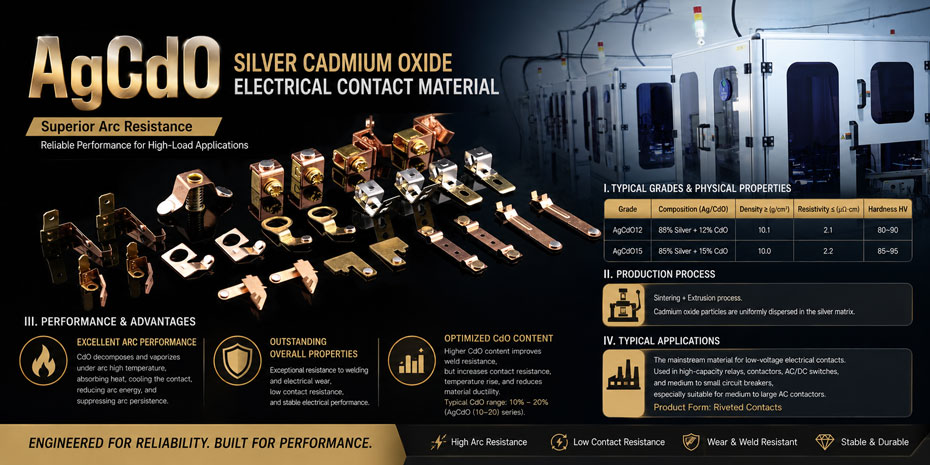
AgCdO works because of a unique “self‑cooling” mechanism. Under arcing, cadmium oxide particles decompose and evaporate, absorbing heat from the arc and quenching it near the contact surface. Higher cadmium oxide content means more aggressive arc cooling → higher resistance to dynamic welding and lower material transfer.
However, increasing CdO also raises two unwanted side effects:
-
Higher electrical resistivity → more Joule heating at the contact interface.
-
Lower material plasticity → more difficult forming and reduced ductility for complex tip shapes.
This is the core trade‑off you must balance: arc endurance vs. contact resistance & temperature rise.
Translating datasheet numbers into operating behaviour
The table below shows two standard AgCdO grades used in industrial switching devices. The differences look small, but their impact on daily operation is significant.
| Parameter | AgCdO12 (12% CdO) | AgCdO15 (15% CdO) | What this means for your equipment |
|---|---|---|---|
| Density (g/cm³) | 10.1 | 10.0 | Slightly lower density in AgCdO15 means marginally more material loss per arc event – negligible for most applications. |
| Resistivity (µΩ·cm) | 2.1 | 2.2 | AgCdO15 generates ~5% more Joule heat at the same current. For high‑duty cycles, this can raise steady‑state temperature by 8–10°C. |
| Hardness (HV) | 80–90 | 85–95 | Harder surface of AgCdO15 resists mechanical impact and fretting wear, beneficial for devices with high closing forces. |
| Anti‑welding (qualitative) | Good | Better (marked improvement) | AgCdO15 is the choice where contact sticking leads to system failure (e.g., emergency stop circuits). |
| Contact resistance stability | Very stable | Slightly higher, may drift with arc count | AgCdO15 may require a slightly higher contact force to achieve the same milli‑ohm stability over life. |
Data source: internal physical property measurement, consistent with ISO 5182 (electrical contact materials – silver‑based).
A 4‑step decision framework for AgCdO grade selection
Instead of guessing, apply this step‑by‑step logic based on your actual operating conditions.
Step 1 – Identify the dominant failure mode in your current device
-
Frequent contact welding / sticking → favour AgCdO15.
-
Over‑temperature trips or accelerated insulation aging → favour AgCdO12.
Step 2 – Quantify your load profile
-
High current (≥30A) with resistive load → both grades work, AgCdO12 keeps temperature lower.
-
Inductive / motor loads with high inrush → AgCdO15 significantly reduces the risk of welding during start‑up.
-
*Very high switching frequency (>100 ops/hour)* → the extra heat from AgCdO15 can accumulate. Check thermal design.
Step 3 – Consider manufacturing form
Complex shaped solid rivets or stamped contact tips require good formability. AgCdO12 remains more ductile and easier to produce without cracking. For simple button‑type contacts, AgCdO15 is fully acceptable.
Step 4 – Verify environmental and regulatory compliance
Cadmium is restricted under EU RoHS, but electrical contacts enjoy a specific exemption (until new substitution deadlines). Saijin uses only RoHS‑compliant raw materials and follows REACH requirements – our AgCdO products are manufactured under the current exemption while we actively develop next‑gen alternatives.
Where each grade typically fits best
Based on decades of field data from relay, contactor, and switch manufacturers:
-
AgCdO12 – General‑purpose medium‑capacity AC contactors (25–60A), power relays, changeover switches where temperature rise is a critical design limit. It provides excellent arc resistance with lower heating, and its better plasticity allows complex tip geometries.
-
AgCdO15 – Heavy‑duty welding‑prone applications: DC contactors for electric vehicles chargers, large AC contactors for motor starting (≥75A), and switch disconnectors with very slow opening speeds. The higher hardness also improves mechanical wear life under high contact forces.
Beyond the datasheet: what your supplier’s process really matters
Uniform dispersion of cadmium oxide particles is invisible on a standard property table, but it directly determines whether your contacts will perform identically across millions of operations. Inhomogeneous clustering leads to localised overheating, unpredictable welding, and early failure.
That is why Saijin has refined its sintering, extrusion, and wire drawing chain since 1998. Every lot is verified with professional inspection equipment and documented according to ISO 9001:2015.
For applications where both high anti‑welding and strict contact resistance limits are required simultaneously, you may consider alternative systems like AgSnO₂ or AgNi. However, for proven performance in mid‑to‑large capacity devices with well‑understood arcing conditions, AgCdO remains the benchmark.
Your next step: from material understanding to component specification
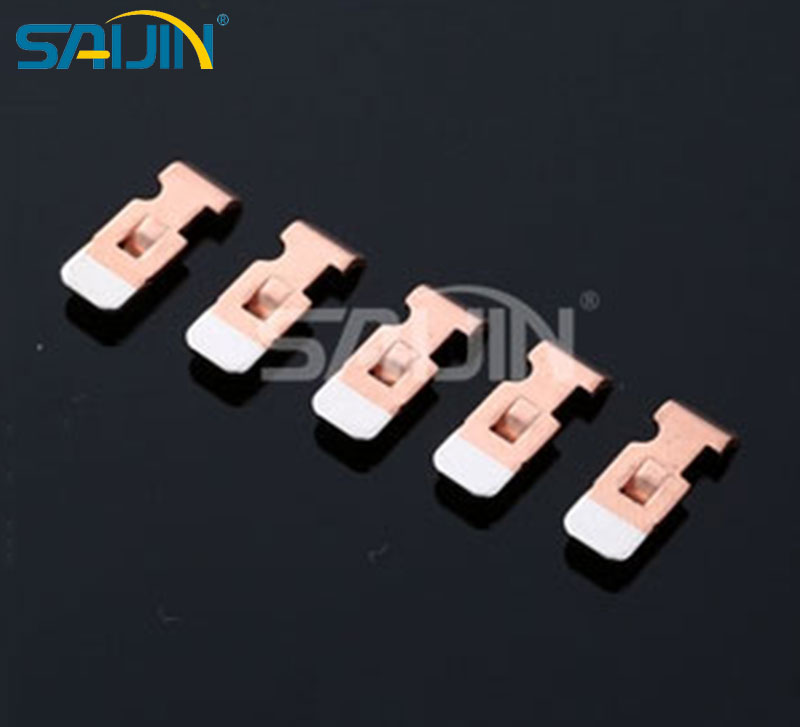
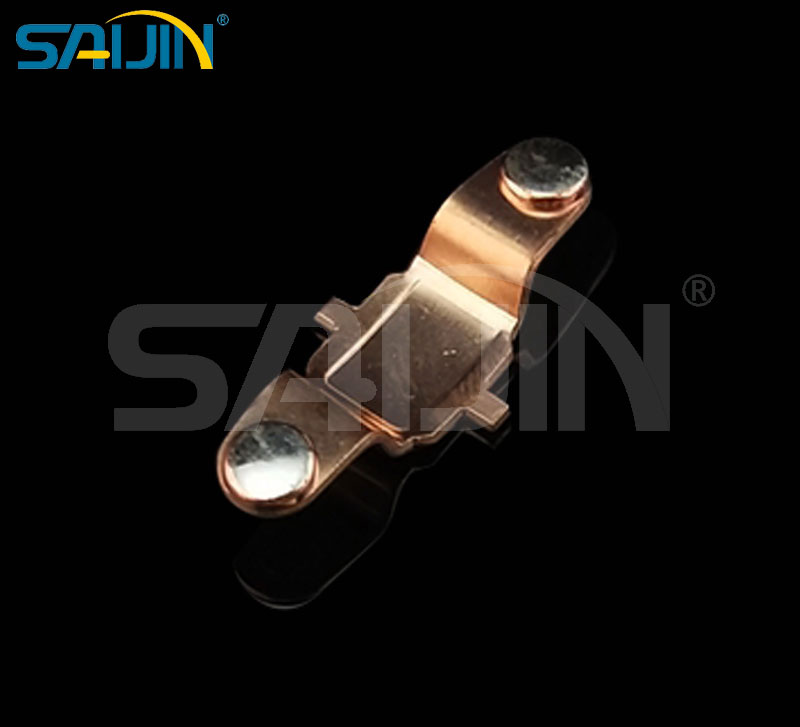
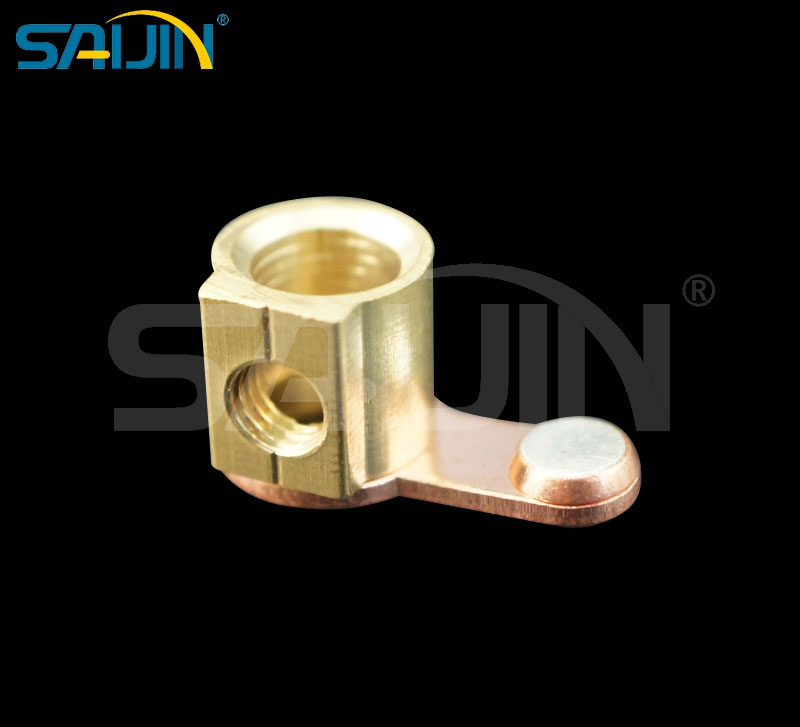
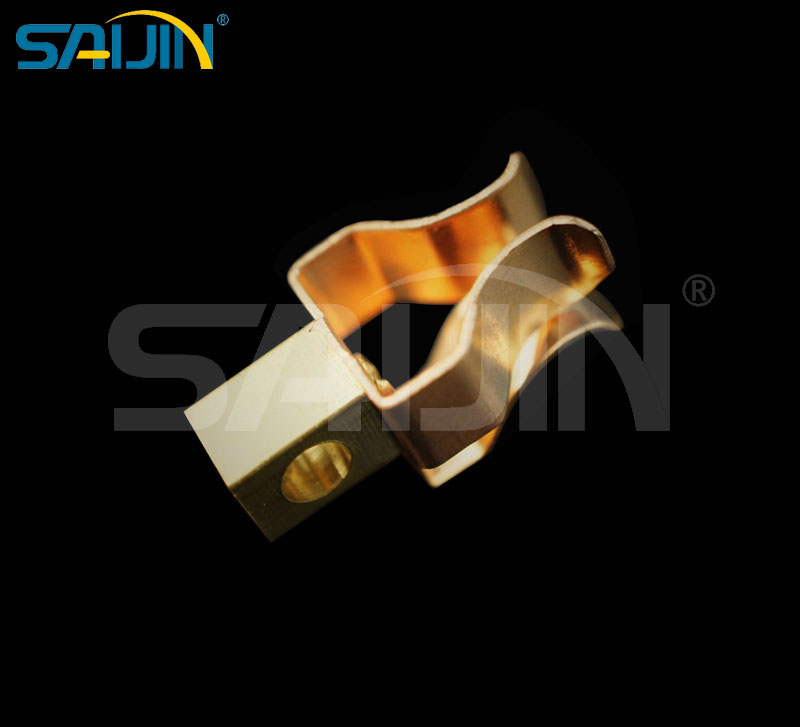
Once you have determined the optimal cadmium content range for your load profile, forming needs, and thermal budget, the logical next step is to compare detailed dimensional and tolerance specifications for specific contact types – such as solid rivets, bimetal tips, or composite strip‑stamped parts.
You can review Saijin’s silver‑based contact series designed for heavy‑duty switching devices, including full AgCdO12 and AgCdO15 technical data sheets, forming limits, and available standard dimensions.
After clarifying the required cadmium content and evaluating the four decision factors above, the next logical step is to compare the exact dimensions, tolerances, and available composite configurations of each contact series. You can request the full technical specification package for Saijin’s AgCdO12 and AgCdO15 contact tips, or consult our application engineers to simulate performance under your actual duty cycle – without any commitment to purchase.
Related Reading
-
Key Selection Factors for Silver‑Based Contact Materials – a visual comparison chart.
-
AgCdO vs. AgSnO₂: When to Transition to Cadmium‑Free Alternatives
-
How to Interpret Contact Resistance Drift in Accelerated Life Tests
-
Thermal Management in High‑Density Power Relays: Contact Material Impact
-
5 Signs Your Switching Device Needs a Higher Anti‑Welding Grade
*Saijin Electrical Alloy Co., Ltd. – manufacturing electrical contact components since 1998. Our laboratory, ISO 9001 and RoHS/REACH compliance, and long history of serving the “Electrical Capital of China” (Wenzhou) support every material recommendation with verified data, not marketing claims.*