China
China Pусский
 Español
 EN
ENHow Does a Silver Rivet Contact Work in Relays?
You've seen a relay before. A coil energizes. A movable armature pulls in. Contacts close. Current flows. But what actually happens at the contact point — the precise moment when two metal surfaces meet and carry current — determines whether the relay performs reliably or fails prematurely.
In a relay, the silver rivet contact is the component that makes and breaks the electrical circuit. When the relay coil is energized, the movable contact bridges the gap between two fixed contacts. Current flows through the silver alloy surface. When the coil is de-energized, the contacts separate, and the arc is extinguished. The rivet structure ensures consistent contact pressure, while silver's conductivity, arc resistance, and corrosion resistance deliver reliable performance through thousands of switching cycles. This guide covers how silver rivet contacts work in relays, why the rivet structure matters, and what makes silver the preferred material for contact surfaces.
What happens at the contact point
The contact is where the electrical circuit is actually made or broken. Understanding the role of the silver rivet contact requires understanding what happens at the contact point.
When the contact meets — current flows
When the relay coil is energized, the armature moves the movable contact toward the fixed contacts. The silver rivet contact surfaces meet. The circuit is complete. Current flows through the silver alloy surface. The low resistance of silver means minimal heat generation and efficient current transfer.
When the contact parts — the arc appears
When the relay coil is de-energized, the armature retracts. The movable contact separates from the fixed contacts. An arc forms across the gap as the current tries to continue flowing. The silver contact surface must withstand this arc without significant erosion or welding.
The arc is the real enemy
When contacts separate under load, an arc forms. The arc temperature can exceed several thousand degrees Celsius. Silver's high melting point and arc resistance allow the contact surface to survive this extreme condition. Over thousands of cycles, the arc gradually erodes the contact surface — but silver erodes less than copper, brass, or tin.
The mechanical reason for rivets
The rivet contact structure isn't just a manufacturing choice — it's an engineering decision that affects relay performance and reliability.
Rivets stay put under vibration and impact
The rivet structure creates a strong mechanical bond between the silver contact and the copper or brass terminal. This bond withstands the mechanical impact of millions of switching cycles without loosening. In automotive relays, where vibration is constant, this stability is critical.
Rivets deliver pressure that doesn't fade
The rivet design allows for consistent contact pressure across the mating surfaces. This ensures low and stable contact resistance over the life of the relay. In relays, consistent contact pressure is what makes the difference between a device that works for years and one that fails prematurely.
Silver where it matters, copper where it holds
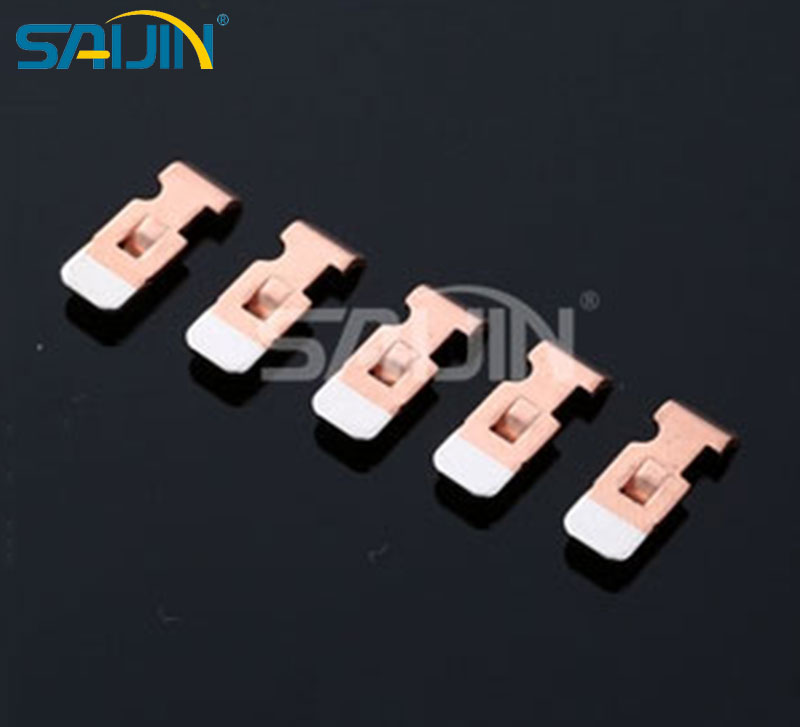
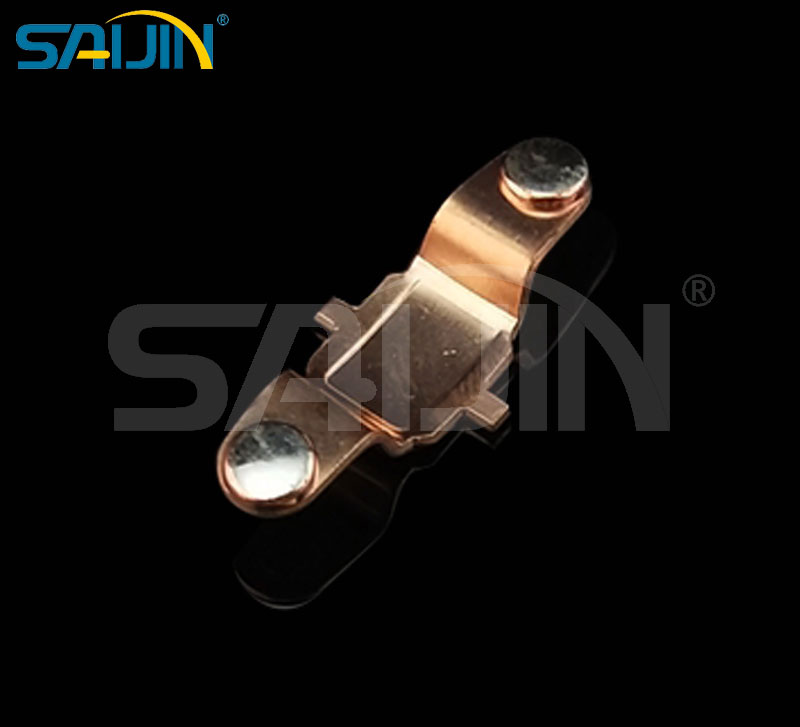
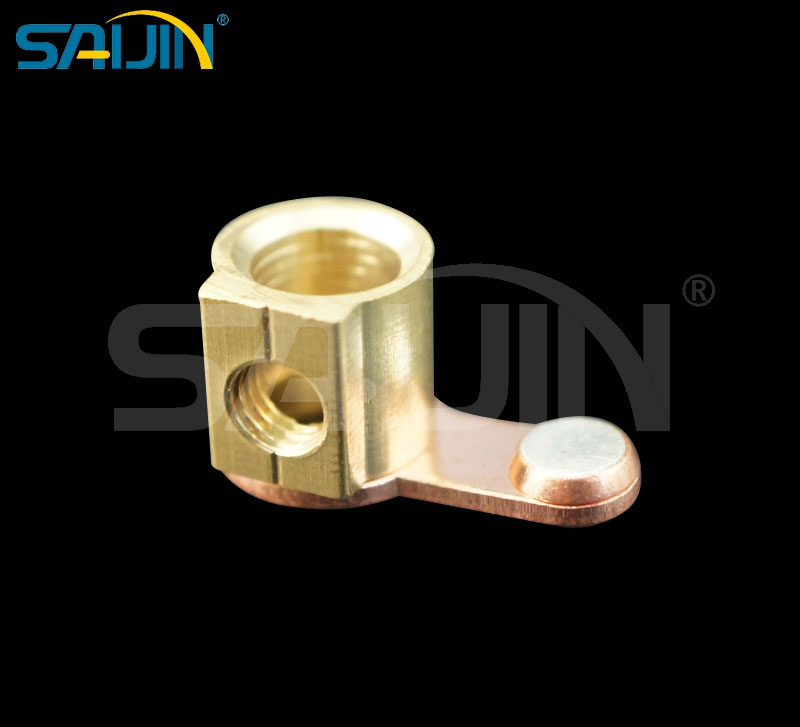
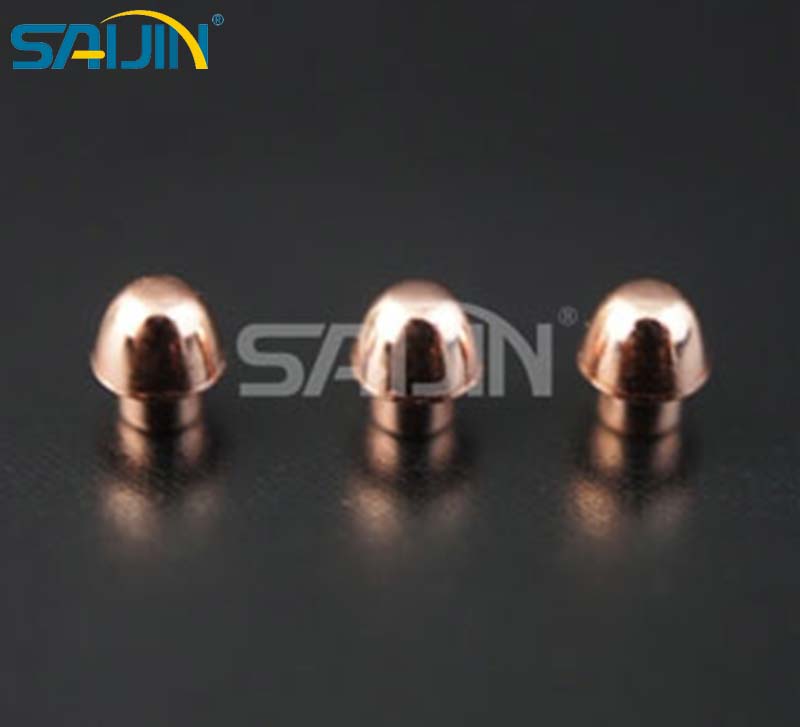
A silver rivet contact is typically a silver alloy disc or button attached to a copper or brass base. The silver provides the conductive and arc-resistant surface. The copper or brass provides mechanical strength and cost efficiency. This combination delivers the performance of silver where it's needed — at the contact surface — while keeping the overall component cost manageable.
What kills contacts — and why silver survives
Relay contacts fail in predictable ways. Silver rivet contacts are designed to resist each failure mode.
The contacts can weld shut
When contacts close under high current, the heat can cause the contact surfaces to weld together. The relay then fails to open. Silver alloys — particularly silver-cadmium oxide (AgCdO) and silver-tin oxide (AgSnO) — are formulated to resist welding.
The arc slowly eats the contact away
Each arc erodes a small amount of material from the contact surface. Over time, the contact gap increases, and the relay eventually fails to make contact. Silver's arc resistance slows this erosion, extending relay life.
Resistance rises — heat builds — failure follows
Oxidation, contamination, or surface damage increases contact resistance. Higher resistance means more heat, which accelerates failure. Silver's resistance to oxidation and corrosion maintains low contact resistance throughout the relay's life.
What engineers actually ask before specifying contacts
Q: Silver rivet vs. solid silver — which one fits your relay?
A: A silver rivet contact combines a silver alloy contact surface with a copper or brass base. The silver provides the arc-resistant, low-resistance surface. The base provides mechanical strength and cost efficiency. A solid silver contact is pure silver throughout — higher performance but significantly more expensive. For most relay applications, the rivet design offers the best balance.
Q: AgNi, AgCdO, AgSnO — which alloy belongs in your relay?
A: The most common alloys are silver-nickel (AgNi), silver-cadmium oxide (AgCdO), and silver-tin oxide (AgSnO). AgNi is a good general-purpose choice for lower-current relays. AgCdO has been a standard for many years but is being replaced by AgSnO in some applications due to environmental considerations. The choice depends on the relay's current rating and switching frequency.
Q: The rivet gives stability — here's how that matters
A: The rivet structure provides mechanical stability under repeated switching, consistent contact pressure across the mating surfaces, and a strong bond between the silver contact and the terminal. This translates to lower and more stable contact resistance, longer relay life, and better resistance to vibration and shock.
Q: Three signs your contact is wearing out
A: Signs of failing contacts include increased contact resistance (measured as higher voltage drop across the closed contacts), intermittent operation, welding (the relay won't open), and visible erosion or pitting on the contact surface. In production testing, contact resistance is typically measured with a milliohmmeter.
How Saijin supports reliable relay contact design
Saijin has been manufacturing silver rivet contacts and other electrical contacts for over 20 years. The company serves industries including automotive, aerospace, communications, and industrial equipment. Its integrated team covers research and development, production, sales, and customer service.
The company's capabilities include custom manufacturing based on customer drawings, sample verification before production, and production flexibility to meet volume and timeline requirements. Saijin's quality certifications, including RoHS and REACH compliance, provide additional assurance for engineers and procurement teams. The quality control process includes material hardness testing, automatic contact detection, and projection detection to ensure consistent quality.
Before you specify contacts for your next relay design, consider the application's current rating, switching frequency, and environmental conditions. The right silver rivet contact delivers the performance you need — and the reliability your customers expect.
Ready to evaluate silver rivet contacts for your relay application? Contact Saijin for a consultation, sample verification, or custom mold development. Share your current rating, switching frequency, and environmental requirements — their team can recommend the right silver alloy and rivet configuration for your specific needs.