China
China Pусский
 Español
 EN
ENReliable Switching Starts with the Right Silver Rivet Contact
You‘re designing a relay, a contactor, or a switch. The electrical contacts inside that device determine whether it performs reliably for years or fails prematurely. A Silver Rivet Contact is the interface where electrical current makes or breaks—literally.
The right contact material and construction can be the difference between a product that earns a reputation for reliability and one that generates warranty claims. Saijin’s Electrical Silver Contact is designed to provide reliable electrical connections and excellent conductive properties, with a rivet contact structure that ensures the stability and firmness of the electrical connection. This guide covers why silver is the preferred contact material, how rivet construction works, the key specifications that matter, and where these components are used. For engineers and procurement professionals in the electrical component industry, this is a practical look at a component that‘s easy to overlook but impossible to replace.
Silver Material – The Foundation of Reliability
Silver isn’t just a conductor—it’s the best conductor. The material properties of silver make it the go-to choice for critical electrical contacts.
Highest Electrical Conductivity
Silver has the highest electrical conductivity of any metal, rated at 106% IACS (International Annealed Copper Standard). This means a silver contact can carry more current with less resistance than a copper contact of the same size. Lower resistance means less heat generation, which translates to longer contact life. Silver has excellent conductive properties as a material, making it ideal for a variety of high current and high frequency applications.
Low and Stable Contact Resistance
Contact resistance is the enemy of reliable switching. Silver offers low and stable contact resistance, which remains consistent over thousands of switching cycles. The corrosion resistance of silver material gives these contacts a long service life.
Available Alloys for Specific Requirements
Different applications call for different properties. Silver alloys like AgNi, AgSnO₂, AgCu, AgZnO, and AgCdO are available to balance conductivity with hardness, arc resistance, or weld resistance. Saijin offers a range of contact materials to match specific application requirements.
| Material | Key Properties | Typical Applications |
|---|---|---|
| Pure Silver (Ag) | Highest conductivity, low contact resistance | General-purpose relays, switches |
| Silver Nickel (AgNi) | Good arc transfer, low and stable resistance | Contactors, circuit breakers |
| Silver Tin Oxide (AgSnO₂) | Low contact resistance, stable under high current | High-current relays, switches |
| Silver Copper (AgCu) | Improved mechanical strength | Switches, connectors |
| Silver Zinc Oxide (AgZnO) | High arc resistance | Contactors, circuit breakers |
Rivet Construction – Stability Under Vibration
The rivet design isn‘t just about shape—it’s about creating a reliable mechanical and electrical bond.
How Rivet Contacts Are Constructed
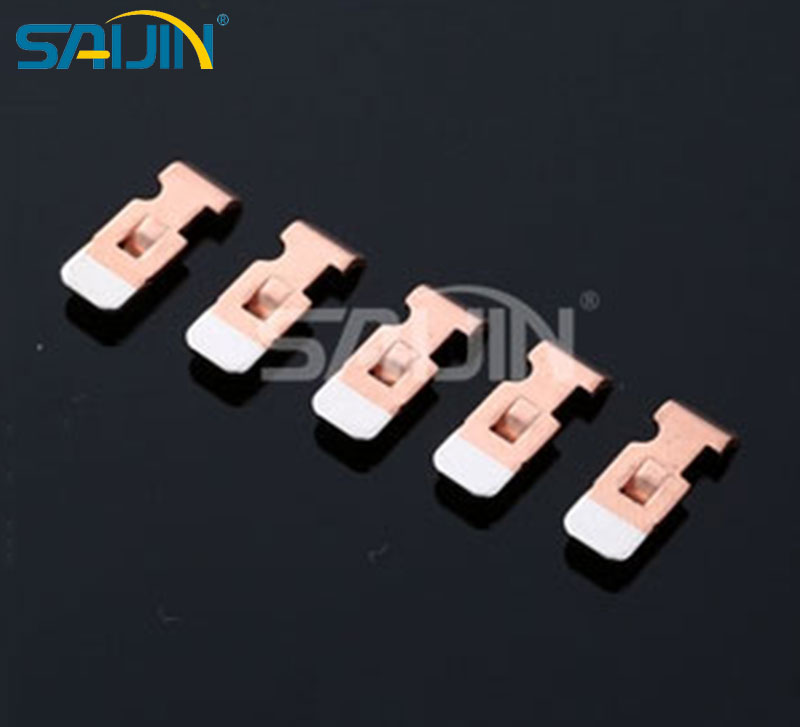
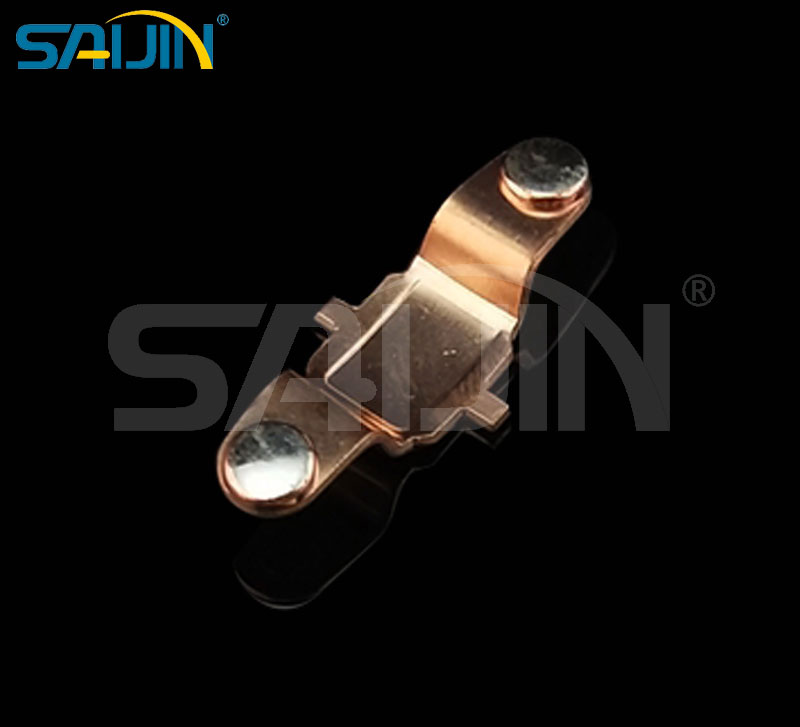
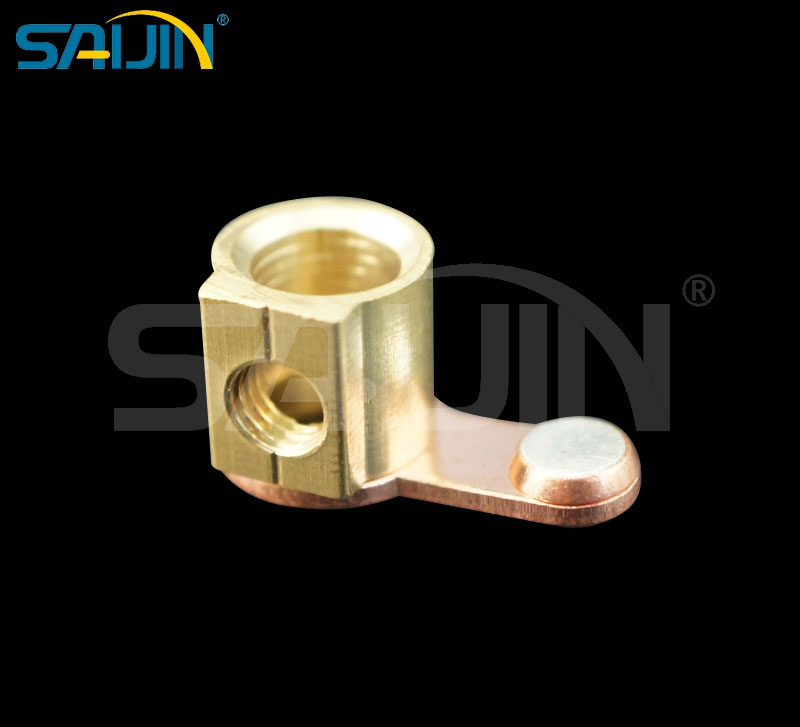
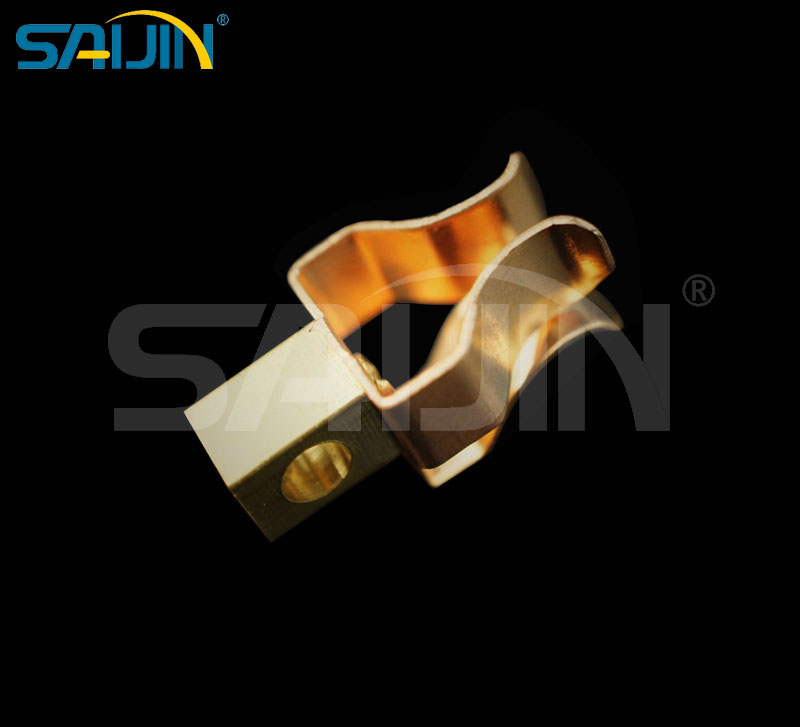
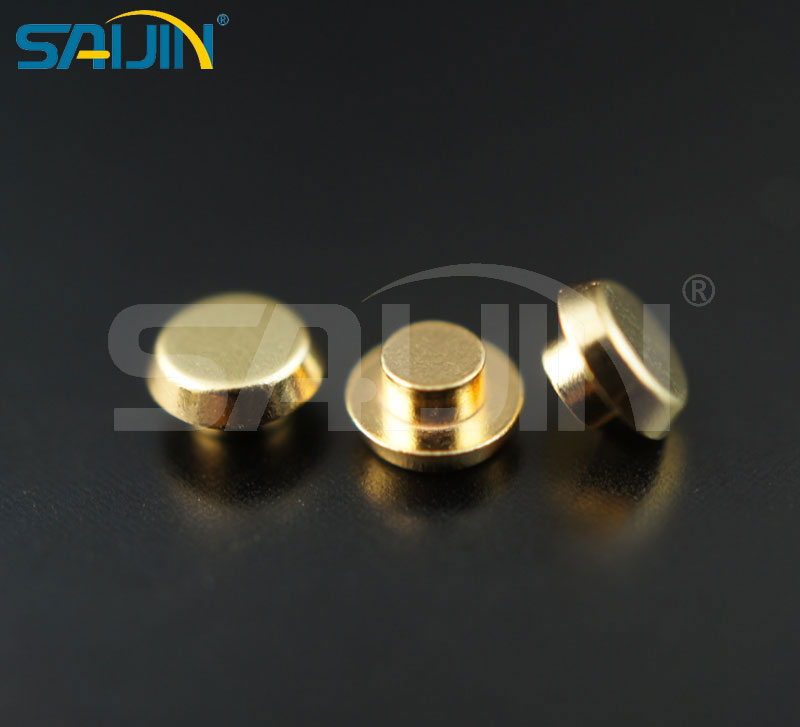
A rivet contact combines a contact surface (the silver or silver alloy layer that makes electrical contact) with a base material (typically copper or brass) that provides mechanical support and connects to the circuit. The rivet head is the contact surface; the shank is crimped or staked into the contact arm. The rivet contact structure ensures the stability and firmness of the electrical connection.
Bimetallic and Trimetal Options
For applications that require different properties on each side of the contact, bimetallic and trimetal rivets are available. For example, a rivet might have a silver contact surface on the working side and a copper base on the mounting side, combining the conductivity of silver with the mechanical properties of copper. This design optimizes material use while reducing cost.
Common Rivet Types
Silver rivet contacts come in several configurations: solid silver rivets, bimetallic rivets (silver on copper), and trimetallic rivets. The choice depends on the contact force, current rating, and switching frequency of the application.
Key Specifications That Define Contact Performance
When specifying a silver rivet contact, these are the parameters that matter.
Material Composition
The alloy determines the contact‘s electrical and mechanical properties. Pure silver offers the highest conductivity. Silver nickel provides better arc resistance. Silver tin oxide is preferred for high-current applications. Saijin’s contacts are available in a range of materials to match specific requirements.
Dimensions and Tolerances
Rivet contacts are typically available in various diameters, with custom dimensions available based on customer drawings. The head shape—flat, R (radiused), or solid—affects contact area and pressure distribution.
Plating and Coating
For applications requiring additional corrosion protection or improved solderability, contacts can be plated with tin, silver, or other materials. Saijin offers customization to meet specific plating requirements.
Quality and Certification
Saijin‘s silver rivet contacts are manufactured to meet EU RoHS and REACH requirements, with complete certificates available. The company’s quality inspection process includes material hardness testing, assembly line random inspection, automatic contact detection, projection detection, and quality inspection screening.
Applications Where Contact Reliability Is Critical
Silver rivet contacts are found in applications across multiple industries where reliable switching is critical.
Relays and Contactors
Relays and contactors rely on contacts to switch electrical loads. The contact must handle the inrush current, withstand arc erosion, and maintain low resistance over millions of cycles. Silver rivet contacts are the standard choice for both low-power signal relays and high-power contactors.
Switches
From wall switches to industrial pushbuttons, silver contacts ensure that the switch performs reliably over thousands of operations. The low and stable contact resistance of silver means less heat generation and longer switch life.
Circuit Breakers and Protectors
Circuit breakers and thermal protectors require contacts that can interrupt fault currents without welding or excessive erosion. Silver alloy contacts are designed to handle these demanding conditions.
Automotive, Aerospace and Communications
Vehicles, aircraft, and communications equipment use silver rivet contacts in relays, switches, and sensors. The combination of high conductivity, corrosion resistance, and durability makes silver the material of choice for these demanding environments.
Questions Engineers and Procurement Teams Ask
What is the difference between solid silver and bimetallic rivet contacts?
Solid silver rivets are made entirely of silver or a silver alloy. They offer the highest conductivity but are more expensive. Bimetallic rivets combine a silver or silver alloy contact surface with a copper or brass base. The silver surface provides the electrical performance; the copper base provides mechanical strength and reduces material cost. For most relay and switch applications, bimetallic rivets offer the best balance of performance and cost.
How do I choose between AgNi, AgSnO₂, and AgCdO contacts?
The choice depends on your application. AgNi (silver nickel) is a general-purpose contact material with good arc transfer characteristics and stable contact resistance. AgSnO₂ (silver tin oxide) is preferred for high-current applications where low and stable contact resistance is critical. AgCdO (silver cadmium oxide) offers excellent arc resistance and anti-weld properties, but its use is restricted in some regions due to environmental regulations.
What is the typical lifespan of a silver rivet contact?
The lifespan depends on the switching conditions—current, voltage, load type, and switching frequency. Under typical relay and switch conditions, silver contacts can achieve 100,000 to 1,000,000 switching cycles before requiring replacement. The wear resistance of silver material gives these contacts a long service life.
Can Saijin provide custom contact designs?
Yes. Saijin offers customization services including technical support and consulting, sample verification, and production flexibility. Custom dimensions, materials, and plating options are available based on customer specifications.
Quality That Delivers Consistent Performance
Choosing the right supplier for silver rivet contacts is as important as choosing the right material.
Saijin has been manufacturing electrical components for more than 20 years, with over 20 sales and service outlets. The company offers a one-stop product range covering various contact types and materials, with customization services including technical support, sample verification, and production flexibility.
Saijin‘s quality assurance process includes material hardness testing, assembly line random inspection, automatic contact detection equipment, projection detection, and quality inspection screening. All products meet EU RoHS and REACH requirements, with complete certificates available. The company’s R&D team is committed to innovation and technological breakthroughs, ensuring seamless connection from development to production.
For engineers and procurement professionals, the decision to specify silver rivet contacts is about more than just the component—it‘s about reliability, consistency, and long-term performance. Saijin provides the material quality, manufacturing capability, and technical support that demanding applications require.
Ready to evaluate silver rivet contacts for your application? Reach out to Saijin‘s team—they can provide material recommendations, sample verification, and custom designs based on your specific contact requirements.