China
 Pусский
 Español

 EN
Why Are Rivet Contacts So Widely Used in Electronics?
Open almost any switch, relay, or contactor, and you’ll find a small metal component that makes and breaks the circuit—a contact. Many of these are special rivet contacts, and they’re everywhere for good reason. They’re simple, reliable, and cost-effective to produce in high volumes. But what exactly makes a rivet contact different from other types of electrical contacts? This guide covers the basics: what they are, how they’re constructed, the materials used, and where you’ll find them. No unnecessary complexity—just the practical information you need to understand this essential component.
What Is a Rivet Contact?
A rivet contact is exactly what it sounds like—an electrical contact shaped like a rivet. It has a head that serves as the contact surface and a shank that’s inserted into a terminal or component, then deformed to create a mechanical grip. This simple design offers several advantages: it’s easy to install, compatible with automated assembly processes, and provides a strong, reliable connection without requiring welding or soldering.
The Cold Heading Process
Most rivet contacts are manufactured using cold heading—a forming process that shapes metal at room temperature. Cold heading produces consistent, high-quality parts at high speed, making it ideal for the volumes required in switch and relay production.
Cladding Options
Rivet contacts come in two primary configurations: head cladding (where the precious metal is bonded only to the head) and cladding at both ends. The cladding material normally be Silver ,such as Ag,AgNi ,AgSnO2,AgcdO and so on.
Material Combinations That Make Sense
The real engineering in a rivet contact lies in the material combination. Using precious metal only where it’s needed—on the contact surface—saves cost without compromising performance.
Common Material Combinations
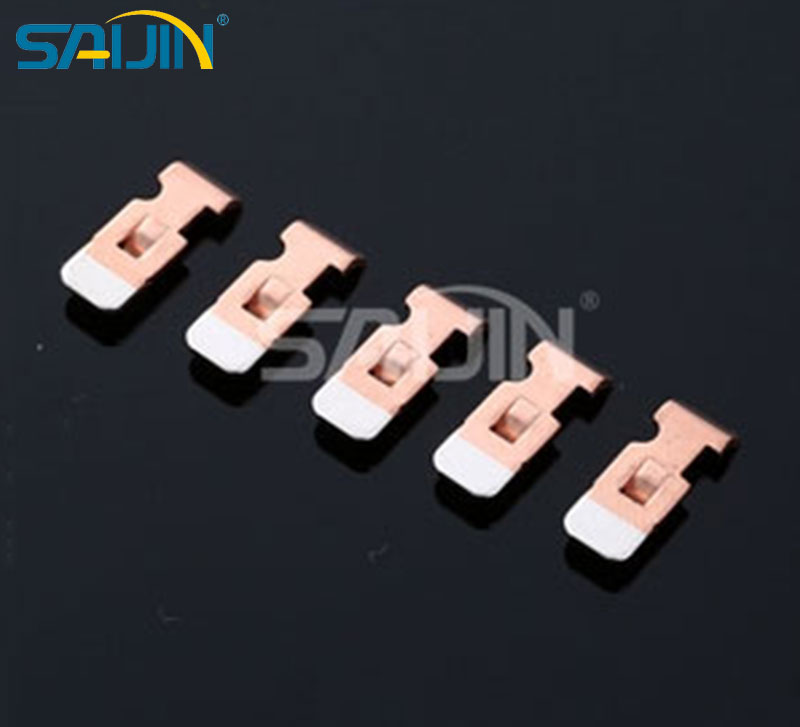
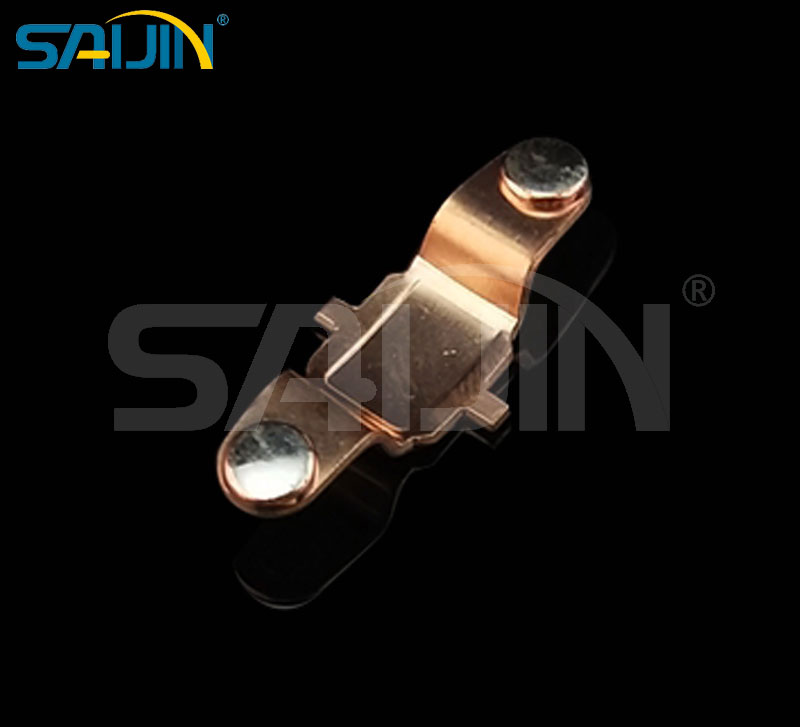
Double composite rivet contacts pair a precious metal working layer with a copper base: Ag/Cu, FAg/Cu, AgNi/Cu, AgSnO2/Cu, AgZnO/Cu, and AgCdO/Cu. Triple composite rivet contacts have precious metal on both ends: Ag/Cu/Ag, FAg/Cu/FAg, AgNi/Cu/AgNi, and AgSnO2/Cu/AgSnO2.
Why Precious Metal Only on the Head?
Using silver or silver alloy only on the contact surface—not the entire rivet—saves precious metal, reduces cost, and supports sustainable manufacturing. It also allows the use of alloys with excellent electrical contact performance that wouldn’t be suitable for a solid rivet due to poor formability.
Where Rivet Contacts Are Used
Rivet contacts are found wherever low-voltage circuits need to be switched reliably. Common applications include switches, relays, thermostats, contactors, disconnectors, controllers, timers, and other low-voltage apparatus. They’re also used in automotive and household appliances.
Switches and Relays
Switches make and break circuits. Relays use a small control signal to switch a larger load. Both rely on contacts that can handle thousands or millions of operations without failure.
Contactors and Thermostats
Contactors are heavy-duty relays used in motor control and power distribution; thermostats use contacts to open and close circuits based on temperature. Rivet contacts are well-suited to both.
Design and Customization Options
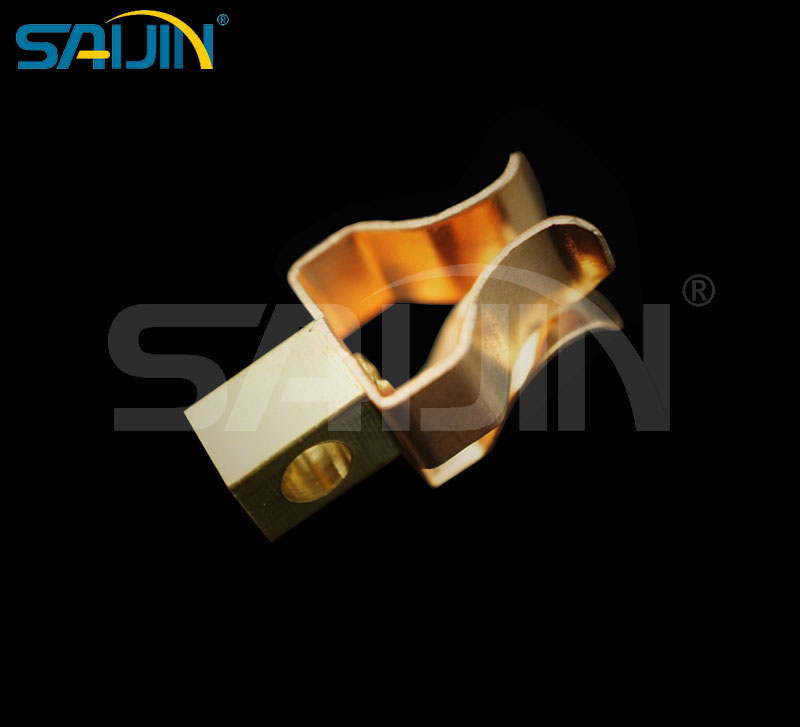
Rivet contacts can be customized to meet specific requirements, including shank length and diameter, head shape and size, and cladding material and thickness. Saijin offers customization based on customer drawings, with the R&D team creating molds for each product.
Head Shapes
Contacts are available with flat or round heads, with dimensions typically ranging from 1.0 to 10mm.
Production Volumes
With the right tooling, production can exceed one billion pieces annually, making rivet contacts viable for even the largest-scale manufacturing operations.
Quality and Compliance Considerations
Quality control is essential. Key inspection steps include material hardness testing, assembly line random inspection, automatic contact detection, and projection detection. On the compliance side, Saijin’s products meet EU RoHS and REACH requirements and are manufactured under ISO9001 certification.
Electrical Performance Factors
The contact interface affects resistance, heat generation, and lifespan. Key factors include shank diameter, hole clearance in the terminal, strip thickness, and hardness of the metals. Proper riveting creates a mechanical grip that ensures long-term connection stability.
Environmental Compliance
For products sold in the EU, RoHS and REACH compliance is mandatory. Saijin uses cadmium-free materials that meet these requirements, reducing environmental impact and ensuring regulatory compliance.

What Engineers Want to Know About Rivet Contacts
What’s the difference between a solid and a hollow rivet contact?
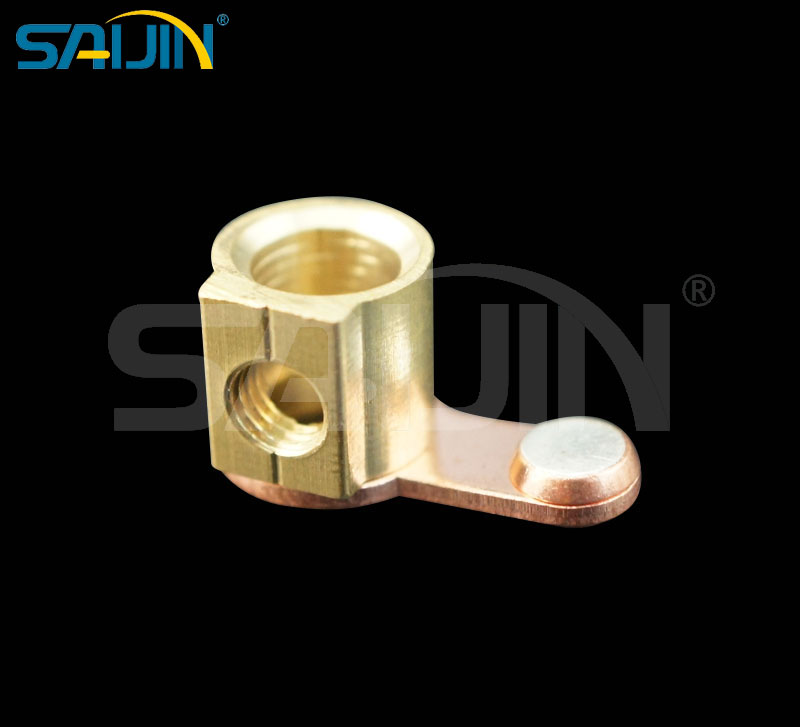
Solid rivet contacts are made from a single piece of material and are stronger but heavier. Hollow and semi-hollow designs reduce weight while maintaining strength. Hollow brass rivets are popular when weight and material cost matter.
How do I choose the right material combination?
Match the contact material to your application. Silver is standard for most general-purpose switches and relays. Silver-nickel (AgNi) offers better resistance to arc erosion. Silver-tin oxide (AgSnO2) is the preferred cadmium-free alternative for higher-current applications.
Can rivet contacts be used in high-current applications?
Rivet contacts are typically used in low-voltage applications. For higher currents, contactors use larger contacts, often with silver-based materials optimized for arc resistance.
What’s the typical lifespan of a rivet contact?
Lifespan depends on the material, current, switching frequency, and environment. Silver contacts in a well-designed relay can last hundreds of thousands to millions of operations.
Get the Right Contacts for Your Application
Rivet contacts are one of those components that look simple but make a big difference in reliability. Request a quote or custom sample → —Saijin‘s team can help you select the right material, head shape, and shank configuration for your specific application.
Saijin (Wenzhou Saijin Electrical Alloy Co., Ltd.), established in 1998, specializes in manufacturing contact rivets, contact points, contact components, electrical accessories, and silver alloy wires. The Hollow Brass Rivets product line offers lightweight, high-strength electrical connection solutions with brass material that provides good conductivity and corrosion resistance. Main materials include Ag, FAg, AgNi, AgCdO, AgSnO2, and AgZnO2 with a copper base. Saijin offers comprehensive customization, technical support, sample verification, and production flexibility. With over 20 years of service experience and certifications including EU RoHS, REACH, and ISO9001, Saijin serves customers across switches, relays, contactors, thermostats, and other low-voltage apparatus applications.