China
 Pусский
 Español

 EN
How Do You Choose the Right Silver Alloy for Your Switching Application?
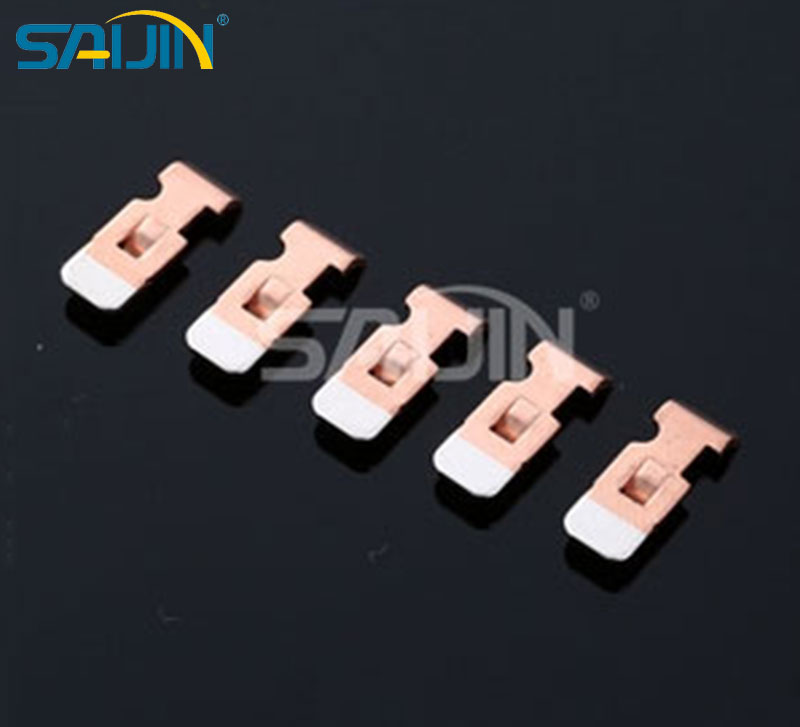
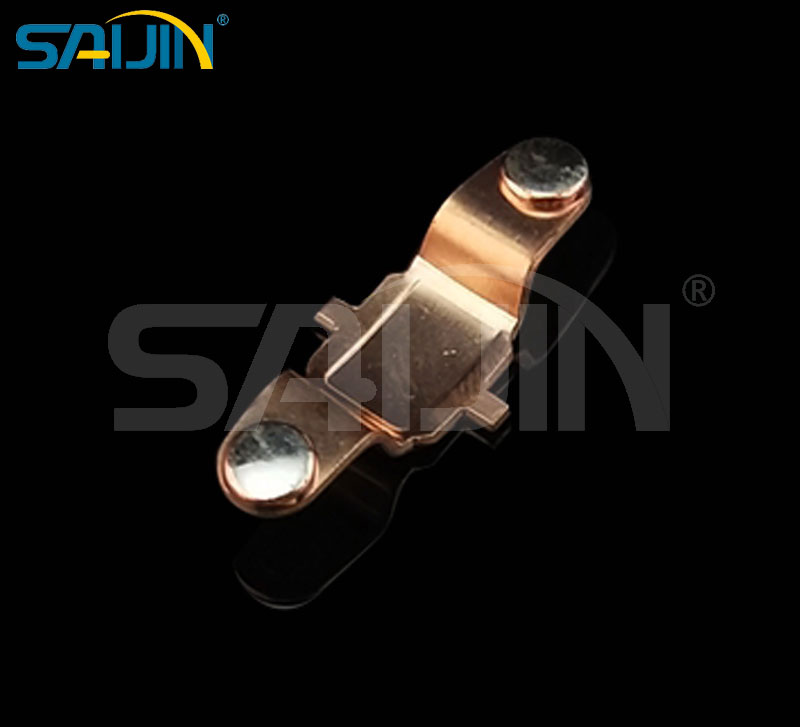
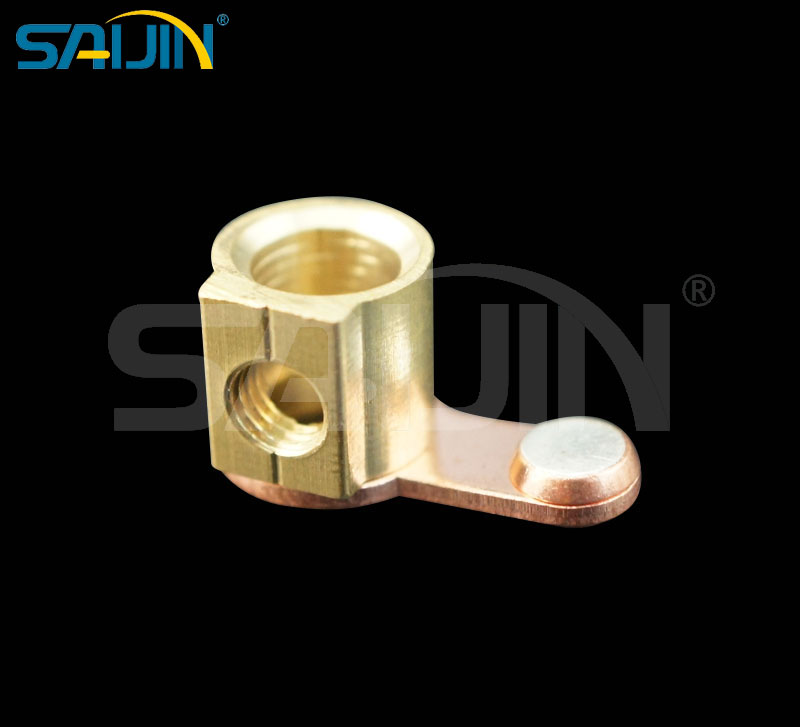
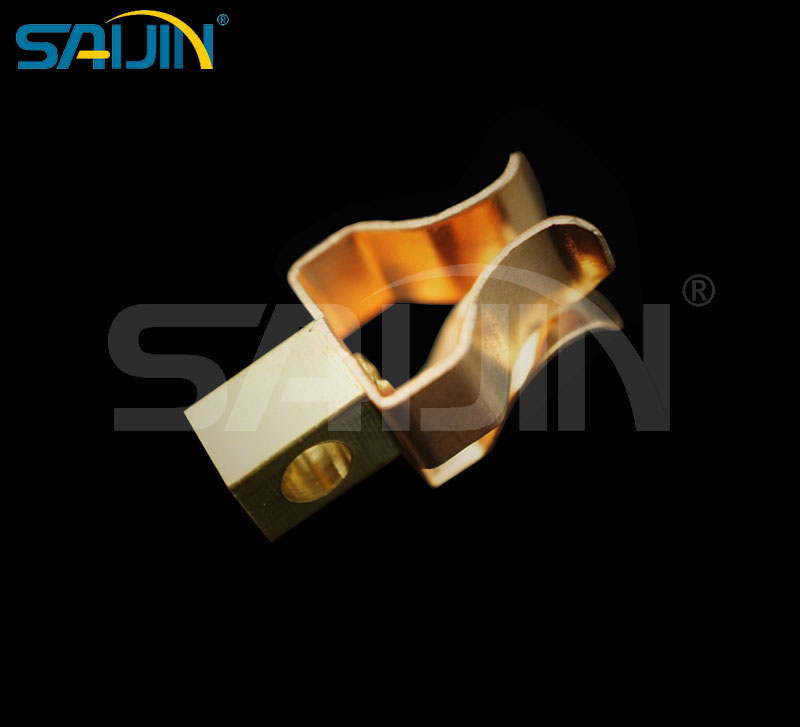
You're specifying contact components for a relay, contactor, or switch, and the choice of contact material isn't always obvious. A silver rivet contact made from the wrong alloy can lead to premature failure—contact welding, excessive arc erosion, or unstable resistance over time. The circuit board concave solid silver rivet contact from Saijin is available in multiple silver alloy variants to match different application requirements. This article walks through how to select the right silver alloy for your switching application—from the maximum conductivity of pure silver to the arc erosion resistance of AgNi and the non-toxic, DC-optimized performance of AgSnO₂.
Questions Engineers Ask About Silver Alloy Selection
Three Selection Concerns—Answered Up Front
Q: What's the difference between pure silver, AgNi, and AgSnO₂ contacts?
A: Pure silver (Ag) offers the highest electrical conductivity—rated at 106% IACS—making it ideal for applications where minimum resistance is critical. AgNi (silver-nickel) provides higher resistance to arc erosion and contact welding than pure silver, with AgNi10 offering a resistivity of ≤2.1 μΩ·cm. AgSnO₂ (silver-tin oxide) delivers high arc erosion resistance, low material transfer in DC operation, and is non-toxic and environmentally friendly.
Q: How do I decide which alloy is best for my application?
A: Consider the switching frequency, current level, and environmental requirements. Pure silver is ideal for general-purpose low-current applications where conductivity is paramount. AgNi is preferred for frequent switching under load where arc erosion is a concern. AgSnO₂ is the choice for DC applications and where cadmium-free materials are required.
Q: What performance specifications should I look for?
A: Key specifications include silver plating thickness (≥3μm standard, optional 5μm for demanding applications), contact resistance, and impact resistance (solid design offers 40% better than bimetal alternatives).
The Material Decision — Why One Silver Alloy Doesn't Fit All
Silver isn't just one material—it's a family of alloys, each engineered to balance conductivity with other critical properties like arc resistance, hardness, and weld resistance. The choice of alloy directly affects contact life, switching reliability, and overall device performance.
Conductivity vs. Arc Resistance — The Trade-Off Every Engineer Must Make
Pure silver offers the highest electrical conductivity of any metal—rated at 106% IACS. But pure silver's resistance to arc erosion and contact welding is limited. Adding alloying elements like nickel or tin oxide reduces conductivity slightly but significantly improves arc resistance and mechanical durability. The right choice depends on your application's priority: maximum conductivity or maximum switching life under load.
How Contact Material Affects Switching Life and Reliability
The contact is the interface where electrical current makes or breaks—literally. A contact that welds shut under load or erodes prematurely will take down the entire switching device. Material selection directly affects contact welding resistance, arc erosion rate, and contact resistance stability over thousands of switching cycles.
Pure Silver (Ag) — When Maximum Conductivity Is the Priority
Silver and fine-grained silver (FAg) possess very high electrical and thermal conductivity, low and stable contact resistance, and good workability.
Very High Electrical and Thermal Conductivity
Pure silver offers the highest electrical conductivity of any metal. A silver contact can carry more current with less resistance than a copper contact of the same size. Lower resistance means less heat generation, which translates to longer contact life.
Low and Stable Contact Resistance Over Time
Silver offers low and stable contact resistance that remains consistent over thousands of switching cycles. The corrosion resistance of silver material gives these contacts a long service life. Pure silver and fine-grained silver are mainly suitable for low current equipment, such as relays, timers, and control switches.
Silver-Nickel (AgNi) — The Arc-Resistant Workhorse
AgNi materials have higher resistance to arc erosion and contact welding than pure silver or fine-grained silver. Both properties improve with higher nickel content.
Higher Resistance to Arc Erosion and Contact Welding
In applications where contacts make and break under load—relays, contactors, and circuit breakers—arc erosion is the primary wear mechanism. AgNi's higher resistance to arc erosion extends contact life significantly compared to pure silver. The material also resists contact welding, preventing contacts from fusing together under high current conditions.
AgNi10 — Resistivity ≤2.1 μΩ·cm for Relays and Contactors
The AgNi10 alloy offers a resistivity of ≤2.1 μΩ·cm, balancing arc resistance with good conductivity. This makes it suitable for relays, contactors, switches, and circuit breakers where both arc resistance and conductivity are required.
Silver-Tin Oxide (AgSnO₂) — The Non-Toxic Alternative
AgSnO₂ contacts show high arc erosion resistance and good resistance against contact welding. Material transfer in DC operation is low. AgSnO₂ type materials are non-toxic and friendly to the environment.
High Arc Erosion Resistance with Low DC Material Transfer
AgSnO₂ delivers high arc erosion resistance and good resistance against contact welding. In DC switching applications, material transfer from one contact to the other can alter contact geometry and cause premature failure. AgSnO₂'s low DC material transfer makes it particularly suitable for DC contactors and relays.
Environmentally Friendly — No Cadmium, No Regulatory Risk
AgSnO₂ materials are non-toxic and environmentally friendly. As regulatory pressure on cadmium-containing materials increases, AgSnO₂ provides a compliant alternative that doesn't compromise performance. It is preferred for high-current applications where low and stable contact resistance is critical.
Material Comparison at a Glance
| Material | Key Properties | Typical Applications | Resistivity |
|---|---|---|---|
| Pure Silver (Ag) | Highest conductivity, low contact resistance, good workability | General-purpose relays, switches, low current devices | Lowest |
| Silver-Nickel (AgNi) | Higher arc erosion resistance, better weld resistance than pure silver | Contactors, circuit breakers, relays | AgNi10: ≤2.1 μΩ·cm |
| Silver-Tin Oxide (AgSnO₂) | High arc erosion resistance, low DC material transfer, non-toxic | High-current relays, DC switches, automotive applications | Moderate |
Applications Where Material Choice Makes the Difference
The circuit board concave solid silver rivet contact is widely used in low to medium voltage electrical applications:
Relays and Timers — AgNi for Long Life
In relays and timers, the contact must withstand frequent making and breaking of connections. AgNi's superior arc erosion resistance and weld resistance make it the preferred choice for these applications. AgNi materials have higher resistance to arc erosion and contact welding than pure silver.
DC Contactors — AgSnO₂ for Low Material Transfer
In DC switching applications, material transfer can cause premature contact failure. AgSnO₂'s low material transfer in DC operation makes it particularly suitable for DC contactors and relays. The material is also non-toxic and environmentally friendly.
High-Voltage Switches — Ag for Maximum Conductivity
For high-voltage switches where minimum resistance is critical, pure silver delivers the highest conductivity. Pure silver and fine-grained silver are suitable for applications requiring extremely low electrical resistance.
Performance Specifications That Define Quality
Beyond material selection, the circuit board concave solid silver rivet contact delivers consistent quality through precision manufacturing:
Fully Solid Structure — 40% Better Impact Resistance
The solid rivet contact features a fully solid structure design, eliminating the interface failure points found in bimetal designs. This delivers 40% better impact resistance compared to bimetal alternatives.
Silver Plating — ≥3μm Standard, 5μm Optional
The contact features silver plating thickness of ≥3μm, with an optional 5μm coating available for extreme environmental applications. The thicker coating provides additional margin against wear and environmental degradation.
One-Step Forming — Low Resistance, High Shock Resistance
Saijin solid rivet contacts adopt a one-step forming riveting process to ensure low resistance and high shock resistance. This manufacturing approach delivers consistent quality across every contact, eliminating the variability that can occur with multi-step processes.

Straight Answers on Silver Alloy Selection
Q: What's the difference between AgNi and AgSnO₂?
A: AgNi (silver-nickel) offers higher resistance to arc erosion and contact welding than pure silver, making it suitable for relays and contactors where frequent switching occurs. AgSnO₂ (silver-tin oxide) provides high arc erosion resistance with low DC material transfer and is non-toxic and environmentally friendly—ideal for DC applications and where cadmium-free materials are required.
Q: Which material is best for DC switching applications?
A: AgSnO₂ is recommended for DC applications due to its low material transfer in DC operation, which helps maintain consistent contact geometry over the switching life.
Q: What is the standard silver plating thickness?
A: The standard silver coating thickness is at least 3μm, with an optional 5μm coating available for extreme environmental applications.
Q: What is the resistivity of AgNi10?
A: AgNi10 alloy has a resistivity of ≤2.1 μΩ·cm.
Q: What automotive certifications does Saijin hold?
A: Saijin's production system has passed IATF 16949 certification, with some products meeting automotive-grade reliability standards.
Request a Quote for Your Contact Application
A silver rivet contact that combines the right silver alloy, solid construction, and precision silver plating is the foundation of any reliable electrical switching device. The circuit board concave solid silver rivet contact from Saijin delivers pure silver, AgNi, and AgSnO₂ material options for different application requirements, a fully solid structure that eliminates interface failure and offers 40% higher impact resistance, ≥3μm silver plating (optional 5μm) for low and stable contact resistance, AgNi10 alloy with resistivity ≤2.1 μΩ·cm for arc-resistant switching, one-step forming riveting process for consistent quality, IATF 16949 certified production for automotive-grade reliability, and customization capabilities for off-standard sizes and special requirements.
Whether you're designing relays, contactors, switches, or circuit breakers, the solid silver rivet contact offers the performance and reliability that electrical engineers require. With automated 100% inspection and a defect rate below 0.1%, Saijin provides the quality assurance that demanding applications demand.
Contact Saijin for a quote or technical consultation → their engineering team can help you select the right alloy, silver plating thickness, and size for your specific application requirements. Get a silver rivet contact that delivers reliable performance every time.